Is Vibe Coding a Real Skill? An Honest Answer
Is vibe coding a real skill? Yes, and here's the honest case: scoping, prompting, verifying and debugging are learnable. See what separates the people who ship.
By VibeGym Team · · Updated
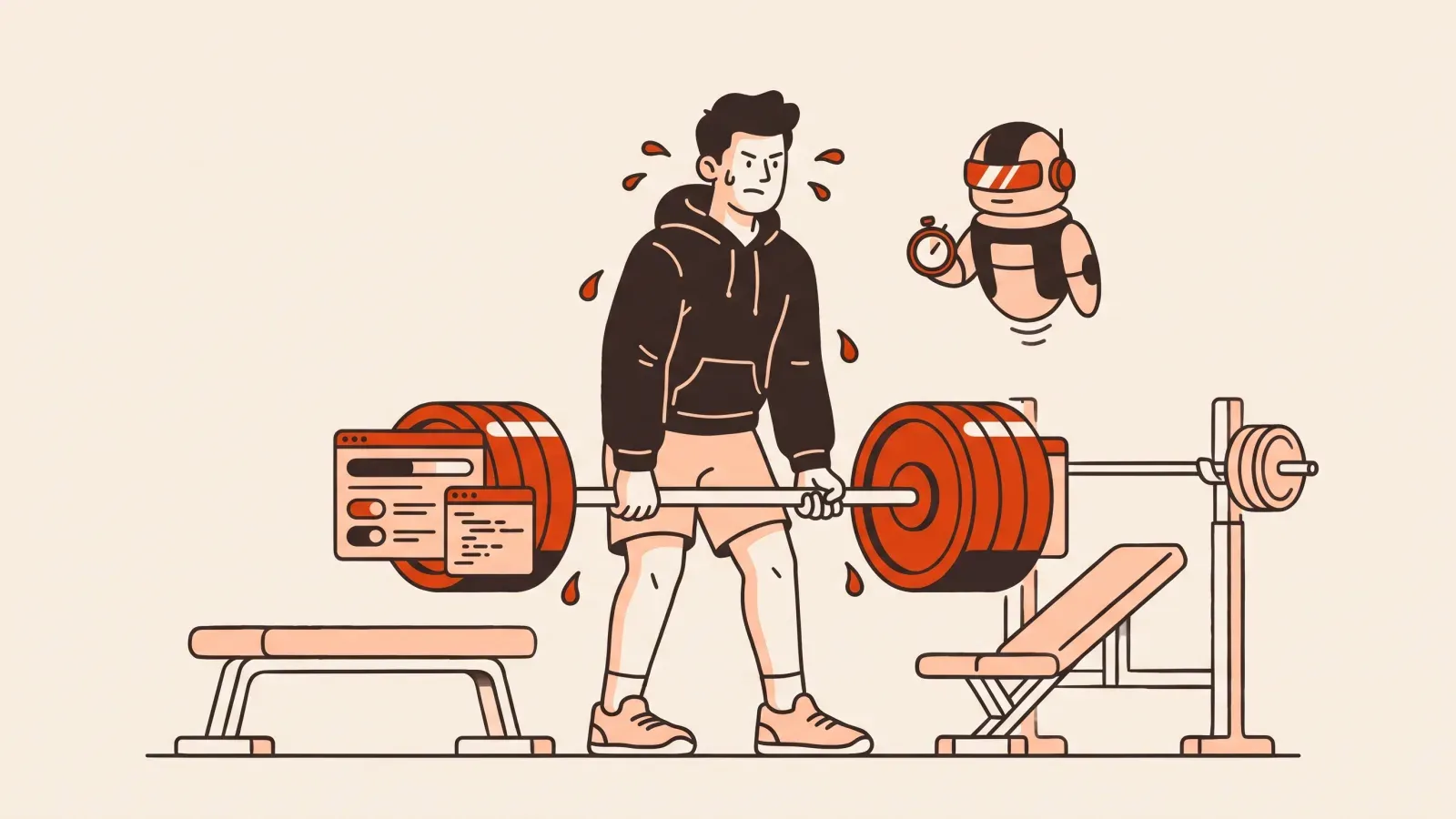
The skill is visible in the decisions and the checks
Working with an AI coding tool can involve real, learnable skills: defining requirements, supplying relevant context, inspecting a change, reproducing a failure and deciding whether a release is ready. Typing a prompt by itself does not demonstrate all of them.
People use “vibe coding” to mean different things, from experimental generation with little code review to a more deliberate AI-assisted workflow. When evaluating your own progress or someone else’s claim, look at the work rather than the label.
Five things you can demonstrate
| Skill | Weak evidence | Stronger evidence |
|---|---|---|
| Scoping | A long list of features | A small brief with explicit acceptance checks |
| Prompting | A polished prompt screenshot | A request that produces the intended bounded change |
| Verification | The agent says “done” | A recorded check of normal, empty and failed states |
| Debugging | Repeated “try again” messages | A reproduction, hypothesis and result of a targeted fix |
| Release judgment | A public URL exists | A checked deployment with known limits and a recovery path |
These are practical assessment criteria, not an industry certification standard. They let you evaluate progress without pretending that every successful generation proves deep software-engineering knowledge.
A simple before-and-after exercise
Start with a working reading-list app in a practice branch. Ask for one change: add a filter showing unfinished books. Before accepting it, specify what the list should show when every book is finished, when none are finished and when a new book is added while the filter is active.
After the change, inspect the diff and run those checks. Then explain how the filter works without reading the agent’s final message. If you find a failure, report the exact steps and test a small fix.
Keep the brief, diff and results as your evidence. The artifact is more informative than the length of the conversation or a claim that you “built with one prompt.”
Tool fluency and engineering judgment are different
Knowing a shortcut or how to open an agent panel helps you work efficiently. Knowing when a change needs a permission test, migration or rollback plan helps you decide whether to trust it. The second category transfers across tools more readily than a particular interface layout.
Cursor’s official quickstart includes reviewing the diff and running project checks. Anthropic’s Claude Code 101 includes context, permissions and verification. These curricula illustrate the kinds of workflow knowledge involved; their existence alone does not prove an individual’s competence.
What a useful portfolio project shows
A project page should explain the problem, intended user, main flow and your contribution. Include what you checked, where data lives and known limitations. If you used AI, state how it helped and how you reviewed the output.
For a small app, a clear bug report and a verified fix can be more instructive than several decorative screenshots. GitHub’s repository workflow offers a way to preserve changes and discussion. Our first-party VibeGym case study uses a real subscription-flow change to show this approach.
What this does not establish about jobs or income
Being able to build a prototype does not automatically establish production readiness, professional seniority or employability. Hiring requirements differ, and operating a system includes work beyond generating the interface. Avoid turning a learning exercise into an income promise.
Use a concrete question instead: “Which kinds of changes can I make and verify without losing control of the project?” As that set grows, you have evidence of a developing skill.
A practical way to train it
Choose one project and repeat the brief → change → check loop. When you find a weak point, practice it directly: scoping, debugging or reviewing a change. The free exercise and lesson catalog give you smaller decisions to practice between project sessions.
Sources checked 2026-10-03
-
GitHub pull request reviews — checked 2026-10-03.
-
MDN website security — checked 2026-10-03.
-
official quickstart — checked 2026-10-03.
-
Claude Code 101 — checked 2026-10-03.
-
repository workflow — checked 2026-10-03.
#vibe coding#beginners#skills